Know what an injury is worth,
in seconds.
Ask in plain language: judge, injury, occupation, fatal or not. Quantica reads the question, searches 2,395 citation-safe Hong Kong personal injury and employees’ compensation quantum judgments, 1990–2026, and answers with real cases, every figure pinned to its paragraph.
Seven days free for law firms, chambers and insurers. Create an account, confirm your email and start searching. No card required.
Plain-language questions. Grounded, cited answers.
Describe the cases you need the way you’d brief a trainee: judge, injury, occupation, court, years, fatal or not. The AI reads the question, searches the corpus, and answers in a sentence or two with the judgments to cite.
- Misspelt judges understood. Type “Bohwani” and Quantica searches Bharwaney J: every name is resolved against the roster of all 372 judges in the corpus.
- It knows the concepts. Fatal accident and dependency claims, loss of accumulation of wealth, LOEC refusals, EC assessments: ask in the language of Hong Kong PI practice.
- Grounded by construction. Answers cite only judgments retrieved from the corpus for your question. If nothing matches, it says so: no invented cases, no invented figures.
- Transparent, not a black box. Every answer shows how your question was interpreted, as chips: judge, court, years, case type. One click reopens the same query in filter search.
The full bench, one tab away.
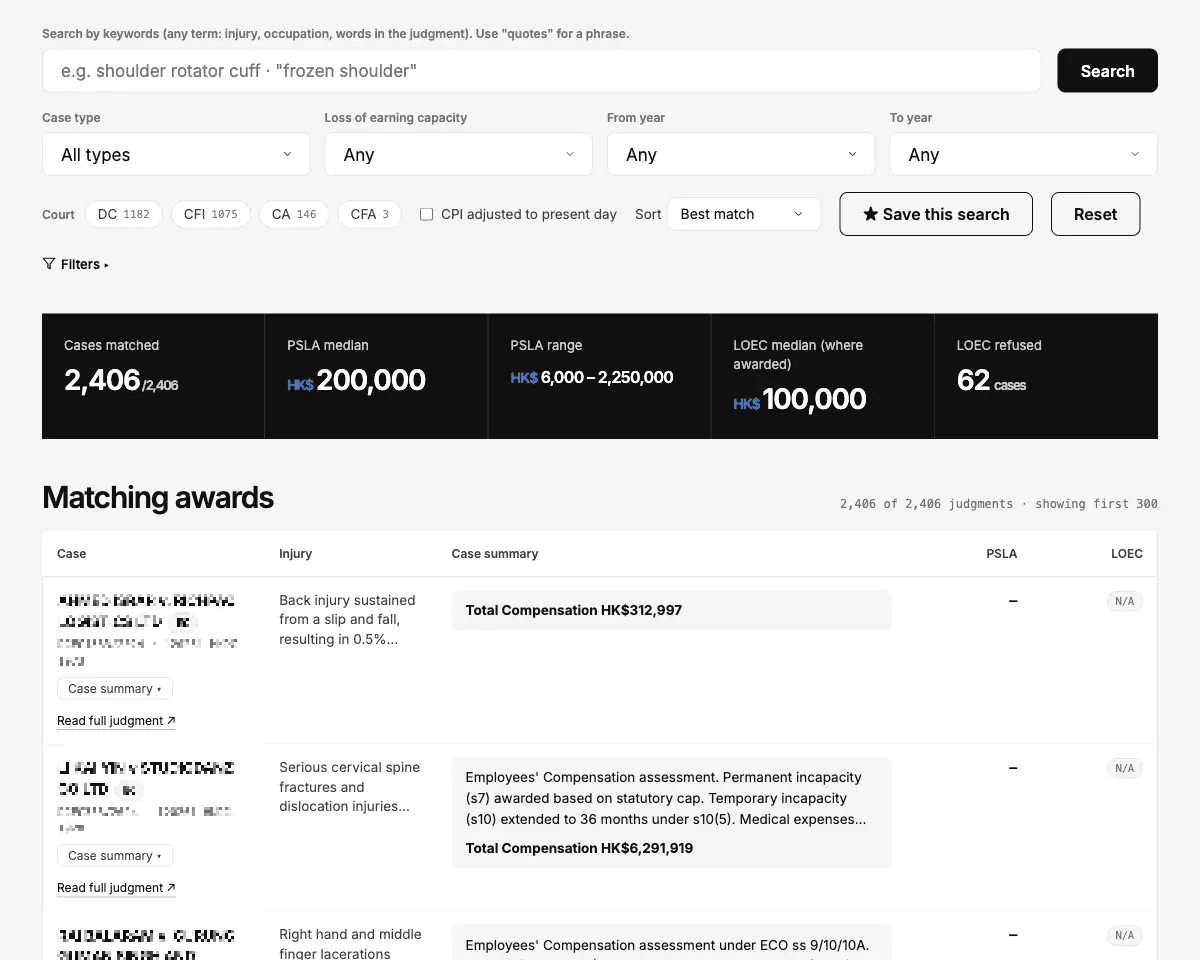
Ask Quantica and the classic filter search share one corpus and one results table. Filter by injury, occupation, court, year and outcome, with live medians and CPI adjustment, whenever you’d rather drive than ask.
PSLA by injury. LOEC by occupation.
Hong Kong quantum turns on two figures. Quantica indexes both across the entire corpus, with medians, ranges, and the judgments to cite for each.
Pain, Suffering & Loss of Amenities: driven by the injury
1,479 cases with PSLA awards, from HK$100 to HK$2.5M (median ≈ HK$250,000). Search by injury: “rotator cuff”, “crush fracture”, “below-knee amputation”, and read the comparable awards with the judge’s own words.
Loss of Earning Capacity: driven by the occupation
468 awards and 422 express refusals. The refusals are a unique asset: reasoned findings you can cite when resisting an LOEC claim, a research answer no headnote service surfaces.
Hours of legal research, answered in seconds.
Quantum in seconds
Filter 2,395 judgments by injury, occupation, court, year, and case type. Medians and ranges compute live over your matching set: reserve-setting and advice letters start from data, not memory.
Citation-safe by construction
Every figure carries the verbatim judgment sentence, its paragraph pin, and the HKLII link:
Refused LOEC as a citable argument
422 cases where the court addressed loss of earning capacity and declined it, with reasons. Defence teams cite them to resist inflated claims; plaintiff teams use them to steer clear of weak heads.
Built for both sides of the claim.
Plaintiff solicitors
Anchor demands in comparable awards. Show the client, and the other side, the median, the range, and the three best cases before the first letter goes out.
Barristers’ chambers
Skeleton-ready citations with the exact paragraph. CPI-adjust historical awards to present-day values, and check whether a case was appealed before relying on it.
Insurers & TPAs
Reserve against the data, not the demand. Employees’ compensation assessments with statutory breakdowns, EC offsets, and nil-after-offset outcomes flagged corpus-wide.
Faster. Cheaper. Defensible.
- General databases cost a fortune, and charge for the whole library when the quantum question needs one specialist corpus done properly.
- Headnotes cover only a fraction of cases. Quantica reads every judgment in scope and extracts the award structure itself, including the unreported decisions where most quantum data lives.
- They are not built for the quantum question. Keyword search returns documents; Quantica answers the question, in plain language if you like, with awards you can put in an advice: PSLA, LOEC, heads of damage, offsets, and net totals.
Frequently asked questions
What is Quantica?
What is Ask Quantica?
Are the AI answers grounded, or can they invent cases?
What makes the figures citation-safe?
What are PSLA and LOEC?
Does it cover employees’ compensation as well as common-law PI?
How is this different from LexisNexis or Westlaw?
How do trials work?
See it on your own cases.
Create your account for seven days of Ask Quantica and filter search over a 100-case sample. Confirm your email and your workspace is ready.
View the annual plans or contact us when you’re ready for access to the full corpus.